
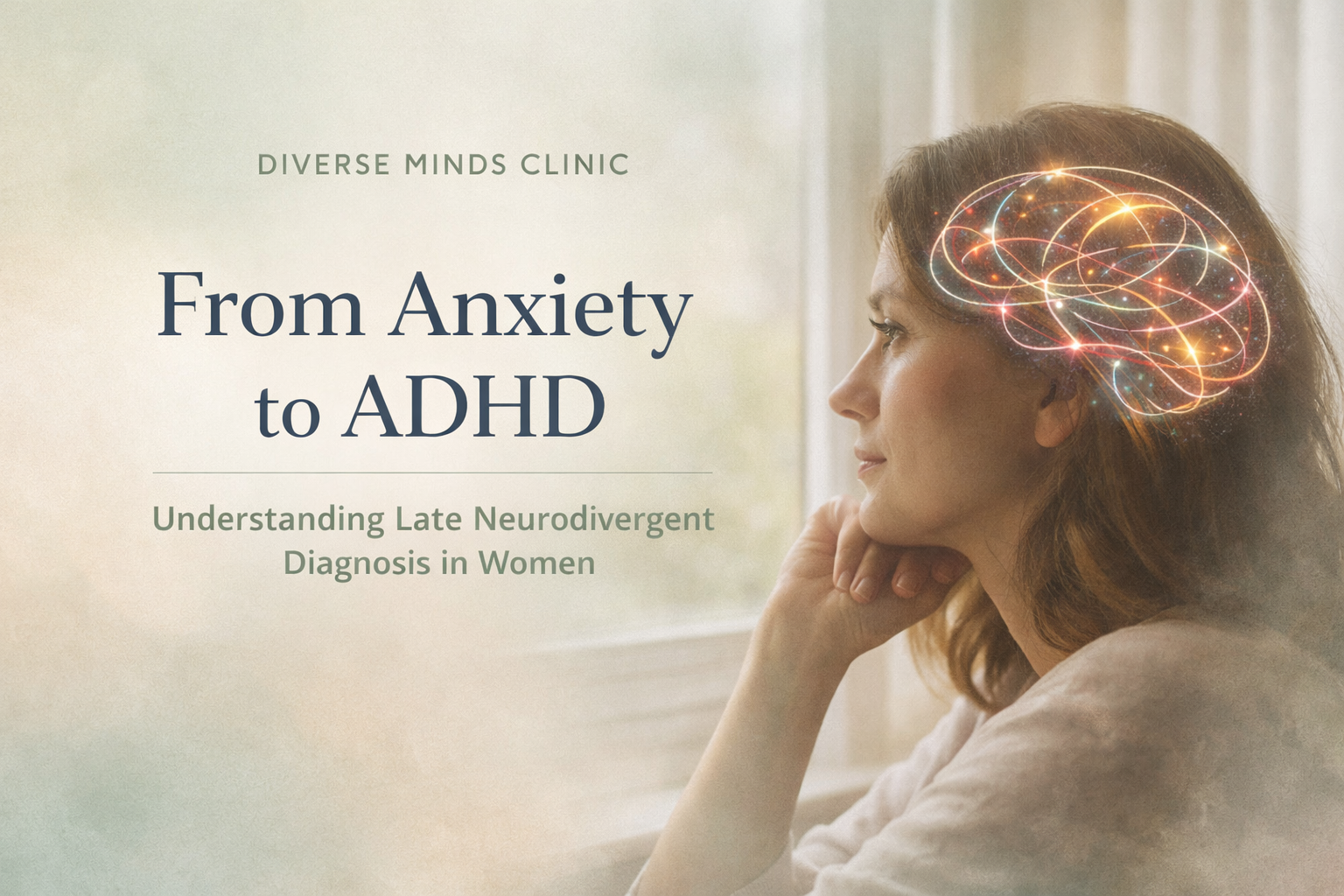
For many women, the path to an ADHD or autism diagnosis does not begin in childhood. It often begins in adulthood, after years of being treated for anxiety, depression, burnout or emotional instability. What appears to be chronic worry or persistent overwhelm may reflect an underlying neurodevelopmental difference that has remained unrecognised for decades.
Across the UK, psychiatric services are reporting a steady rise in adult women seeking assessment for ADHD and autism. This shift does not suggest a sudden increase in prevalence. Instead, it reflects a long-overdue correction in how neurodivergence in women is understood and identified.
Historically, diagnostic frameworks were developed using predominantly male presentations. Hyperactivity, impulsivity and disruptive behaviours were more visible in boys. Girls, however, are more likely to internalise difficulties. They may appear quiet, compliant or high achieving while struggling privately with attention regulation, executive functioning and sensory sensitivity.
Research has highlighted this diagnostic gap. A population study published in The Lancet Psychiatry in 2020 found that girls remain significantly underdiagnosed in childhood despite comparable levels of impairment. Their symptoms are frequently interpreted as personality traits rather than neurodevelopmental differences.
Autism presents similar challenges. Many autistic girls develop sophisticated masking strategies. They observe peers, rehearse conversations and consciously imitate social behaviour to avoid standing out. While this may reduce outward signs, it increases internal strain. Research published in Autism in 2017 demonstrated that camouflaging behaviours are particularly prevalent in autistic females and are associated with delayed diagnosis and increased psychological distress.
A common clinical pattern involves women receiving treatment for anxiety disorders for many years before ADHD or autism is considered. Anxiety is often genuine and distressing, but in some cases it develops as a secondary response to unmanaged neurodevelopmental challenges.
Executive dysfunction, chronic disorganisation, sensory overwhelm and social fatigue can create ongoing stress. Over time, this may present as generalised anxiety, panic symptoms or recurrent depressive episodes. The National Institute for Health and Care Excellence NICE guideline NG87 acknowledges that adult ADHD frequently coexists with anxiety and mood disorders, particularly where diagnosis has been delayed.
Treating anxiety alone without exploring underlying causes may lead to partial improvement but continued functional difficulty.
Women who receive a late diagnosis often describe years of self-criticism. They may have been labelled overly sensitive, disorganised, emotionally reactive or inconsistent. Academic underperformance despite strong intelligence, workplace burnout and relationship strain are common experiences.
Hormonal transitions, including pregnancy, postnatal periods and perimenopause, can further amplify ADHD symptoms, prompting women to seek assessment later in life. Growing public awareness has also contributed to increased self-recognition, with many women identifying lifelong patterns through education and clinical information.
The rise in adult referrals reflects improved awareness rather than overdiagnosis. It represents a more inclusive understanding of how neurodevelopmental conditions manifest across genders.
A thorough psychiatric assessment considers developmental history, academic patterns, occupational functioning, emotional regulation and coexisting mental health conditions. It differentiates between primary anxiety disorders and anxiety that may arise secondary to ADHD or autism.
Diagnosis is not about assigning a label. It provides context. When women understand how their brains process attention, emotion and sensory information, many experience relief and validation.
Evidence supports the benefits of appropriate intervention. Longitudinal research published in JAMA Psychiatry has demonstrated significant improvement in adult functioning and quality of life following structured ADHD treatment. Treatment may include psychoeducation, cognitive behavioural strategies, lifestyle modification and, where appropriate, medication.
The growing recognition of late ADHD and autism diagnoses in women represents meaningful progress in psychiatric care. For many years, unexplained anxiety, overwhelm and emotional exhaustion began to make sense when viewed through a neurodevelopmental lens.
A late diagnosis does not diminish its value. In fact, it can transform self-understanding, reduce shame and open access to appropriate support. When underlying differences are recognised and addressed, women often report improved confidence, emotional stability and occupational clarity.
If persistent anxiety or executive difficulties remain unresolved despite treatment, seeking a comprehensive neurodevelopmental assessment may provide the missing context. Clarity fosters informed support. And informed support creates the foundation for long-term psychological well-being.
When ADHD intersects with traditional masculine norms, many men learn to mask their difficulties. The result is not the absence of symptoms, but years of silent compensation.
Understanding Masking in Adult ADHD
Masking refers to the conscious or unconscious effort to hide or compensate for neurodevelopmental differences to function within social expectations. In men with ADHD, this may involve rigid self-discipline, over-preparation, avoidance of tasks that expose executive difficulties, or excessive work hours to compensate for inefficiency.
Research published in the Journal of Attention Disorders indicates that adults with ADHD frequently develop compensatory strategies that delay formal diagnosis, particularly those with average or above-average intellectual ability. While these strategies may support short-term performance, they are often associated with chronic stress and emotional exhaustion.
A 2020 meta-analysis in Neuroscience and Biobehavioral Reviews highlights that adults with ADHD show measurable differences in emotional regulation networks, which may present not as hyperactivity, but as irritability, frustration, intolerance, or emotional shutdown. In men, these patterns are frequently misunderstood as temperament rather than neurodevelopmental symptoms.
Masculinity and Emotional Containment
Cultural expectations continue to shape how men experience and express psychological distress. Many men are socialised to suppress vulnerability and to prioritise competence, independence, and control.
Admitting difficulties with focus, organisation, or emotional overwhelm can feel incompatible with these expectations.
As a result, ADHD in men may present through secondary consequences rather than primary symptoms. These include workplace burnout, relationship strain, impulsive financial decisions, or periods of depressive symptoms.
The British Journal of Psychiatry has reported that adult ADHD is commonly misdiagnosed or unrecognised in clinical settings, particularly when symptoms are internalised. Studies suggest that between 2 and 4 percent of adults in the UK meet criteria for ADHD, yet many remain undiagnosed well into adulthood.
When ADHD Is Mislabelled
Men with undiagnosed ADHD are frequently treated for anxiety disorders, mood disorders or anger-related difficulties without full exploration of underlying executive functioning patterns.
Long-term untreated ADHD has been associated with increased risk of depression, substance misuse and occupational instability. A large longitudinal study published in The Lancet Psychiatry demonstrated that adults with untreated ADHD had significantly higher rates of comorbid mental health conditions compared with the general population.
Guidance from the National Institute for Health and Care Excellence confirms that ADHD persists into adulthood in a substantial proportion of individuals and requires specialist assessment and evidence-based intervention.
The Psychological Cost of Masking
Masking may protect external reputation, but it often erodes internal well-being. Many men describe living with constant cognitive strain. Maintaining performance requires disproportionate effort. Emotional fatigue accumulates quietly.
Late diagnosis often brings relief in understanding longstanding patterns and grief for years spent attributing neurological differences to personal failure.
Conclusion
When ADHD in men remains hidden behind achievement, humour, stoicism or controlled behaviour, the cost is often carried silently. Masking may protect reputation and relationships in the short term, but over time it can contribute to exhaustion, low self-worth, anxiety and depression. Many men reach adulthood believing they are simply underperforming or not trying hard enough, when in reality their brains process attention, impulse and emotion differently.
Recognition is not about labelling weakness. It is about understanding neurodevelopmental differences and providing appropriate support. Evidence consistently shows that timely assessment and structured intervention improve functioning and quality of life. The National Institute for Health and Care Excellence NICE guidelines NG87 confirm that appropriate diagnosis and treatment of adult ADHD significantly improve emotional regulation, occupational performance and overall well-being.
A comprehensive psychiatric assessment allows men to move from self-blame to self-understanding. With evidence-based treatment, practical strategies and, where appropriate, medication and psychological therapy, many men experience not only symptom improvement but a renewed sense of clarity and confidence.
Understanding ADHD in the context of masculinity requires compassion rather than judgment. When men feel safe to speak openly about attention difficulties, emotional overwhelm or internal restlessness, it creates space for meaningful change. Early recognition and professional support can transform what once felt like personal failure into informed, structured progress.