
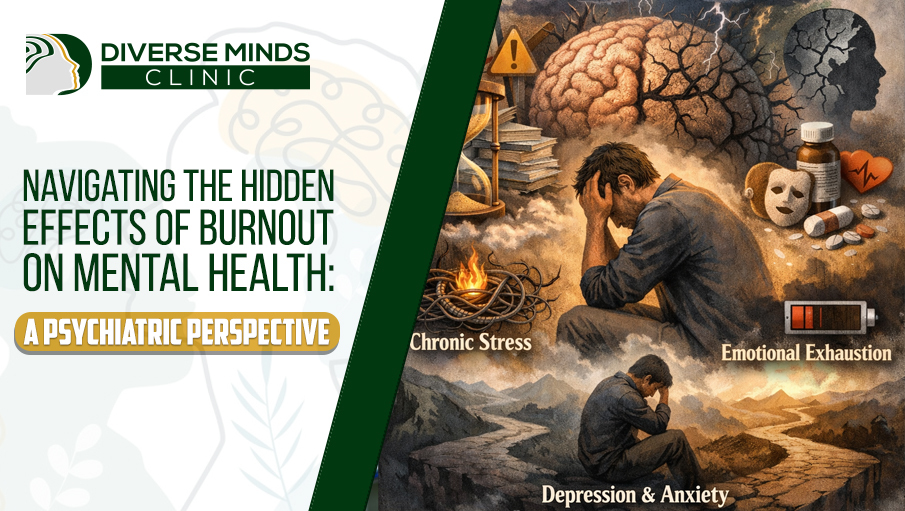
In today’s fast-paced, constantly connected world, burnout has become a widespread issue that often goes unrecognised, especially in the context of mental health. Initially, burnout may appear as stress, fatigue, or frustration, but the underlying effects can have a far-reaching impact on an individual’s emotional and psychological well-being. Psychiatric research increasingly reveals that burnout can mask other mental health conditions, leading to depression, anxiety, and even more severe psychiatric disorders if left untreated.
Understanding the stronger, often hidden effects of burnout is essential, both for individuals and the professionals who support them. In this blog, we will explore how burnout affects mental health from a psychiatric perspective and why early recognition and intervention are crucial.
What is Burnout?
Burnout is commonly described as a state of chronic physical and emotional exhaustion, often resulting from prolonged exposure to high stress, demanding workloads, or interpersonal difficulties in the workplace. However, burnout goes beyond just feeling tired or overwhelmed; it involves a deep sense of detachment, inefficacy, and lack of accomplishment.
The World Health Organisation (WHO) officially recognises burnout as an “occupational phenomenon” rather than a medical condition, but its impact on mental health is profound. A study published in the Journal of Clinical Psychiatry found that individuals suffering from burnout are more likely to experience chronic depression and anxiety disorders, often exacerbated by the stress of trying to maintain high standards of performance despite feeling emotionally drained.
The Hidden Effects of Burnout on Mental Health
Burnout often presents itself as persistent exhaustion or cynicism, but can have underlying effects that are less visible but just as impactful. These hidden effects can contribute to longer-term mental health issues, including:
As individuals move deeper into burnout, they may begin to feel disconnected from their work and relationships. This emotional detachment can manifest as a lack of enthusiasm or motivation, which may initially be perceived as a normal reaction to stress. However, from a psychiatric standpoint, this
detachment is a clear sign of psychological depletion, and left unchecked, it can lead to anxiety disorders or depression.
Cognitive impairment, including memory loss, concentration difficulties, and a sense of being “foggy,” is another hidden effect of burnout. Studies show that chronic stress and burnout can significantly impair brain functions related to attention, decision-making, and problem-solving. The prolonged strain can physically alter the brain’s prefrontal cortex, the region responsible for executive functions, further compounding the individual’s psychological distress.
Burnout often leads to significant disruptions in sleep. Individuals may experience insomnia, night sweats, or difficulty falling and staying asleep. As burnout worsens, the lack of restorative sleep creates a vicious cycle, exacerbating feelings of fatigue and anxiety during waking hours. A review in the Lancet Psychiatry highlights the strong connection between chronic sleep disruption and the development of mood disorders, especially depression.
While burnout itself may not be classified as a mental health disorder, its effects can trigger or worsen existing conditions like depression and generalised anxiety disorder. Research from Psychological Medicine has shown that prolonged burnout can create a vulnerability to emotional and mental health conditions. As burnout persists, individuals may become overwhelmed by feelings of worthlessness and hopelessness, which can evolve into more serious psychological conditions.
The Role of Psychiatry in Managing Burnout
Psychiatrists play an essential role in identifying burnout and differentiating it from other mental health conditions. Early intervention can help address the underlying causes of burnout and prevent it from developing into chronic mental illness. A comprehensive psychiatric assessment allows healthcare professionals to understand not only the symptoms but also the root causes of burnout, such as workplace stressors, personal struggles, or emotional dysregulation.
Psychiatrists also use cognitive-behavioural therapy (CBT), mindfulness-based stress reduction (MBSR), and other therapeutic techniques to address the psychological symptoms of burnout. Medication may also be prescribed in some cases to manage symptoms of depression or anxiety. In severe cases, therapy coupled with lifestyle changes and stress management techniques can significantly improve the individual’s mental health and quality of life.
How to Prevent and Manage Burnout: A Psychiatric Perspective To mitigate the effects of burnout, both individuals and organisations must take proactive steps:
For individuals, creating boundaries between work and personal life is essential. Psychiatrists often recommend learning to say no to overcommitment and making time for self-care and relaxation. Regular breaks during work and time off are key to maintaining emotional and physical well-being.
Employers should create a supportive work environment that promotes mental health. This can include flexible hours, clear expectations, and open communication channels. Reducing workplace stressors and creating a more balanced workload can prevent burnout from occurring in the first place.
Seeking therapy and participating in support groups can help individuals process their experiences and gain the tools necessary to manage burnout. Mental health professionals can guide individuals through cognitive restructuring and teach coping skills to reduce stress.
Psychiatrists often recommend mindfulness practices, such as meditation or yoga, to help reduce stress and promote a sense of calm. These practices allow individuals to regain control over their emotional responses, reduce anxiety, and improve mental clarity.
Conclusion
Burnout is a silent epidemic that affects many individuals, particularly those in high-stress professions or environments. Understanding the hidden psychological effects of burnout can help individuals recognise it early and seek professional help. Addressing burnout through a combination of therapy, lifestyle changes, and psychiatric care is essential for improving mental health and ensuring long-term well-being.
As Dr Brene Brown wisely states,
“You can’t get to courage without walking through vulnerability.”
Facing burnout is difficult, but acknowledging it and seeking support is the first step toward healing.